Decklog #5: Golgari Airship
New threats, better matchups - a turning point for the deck
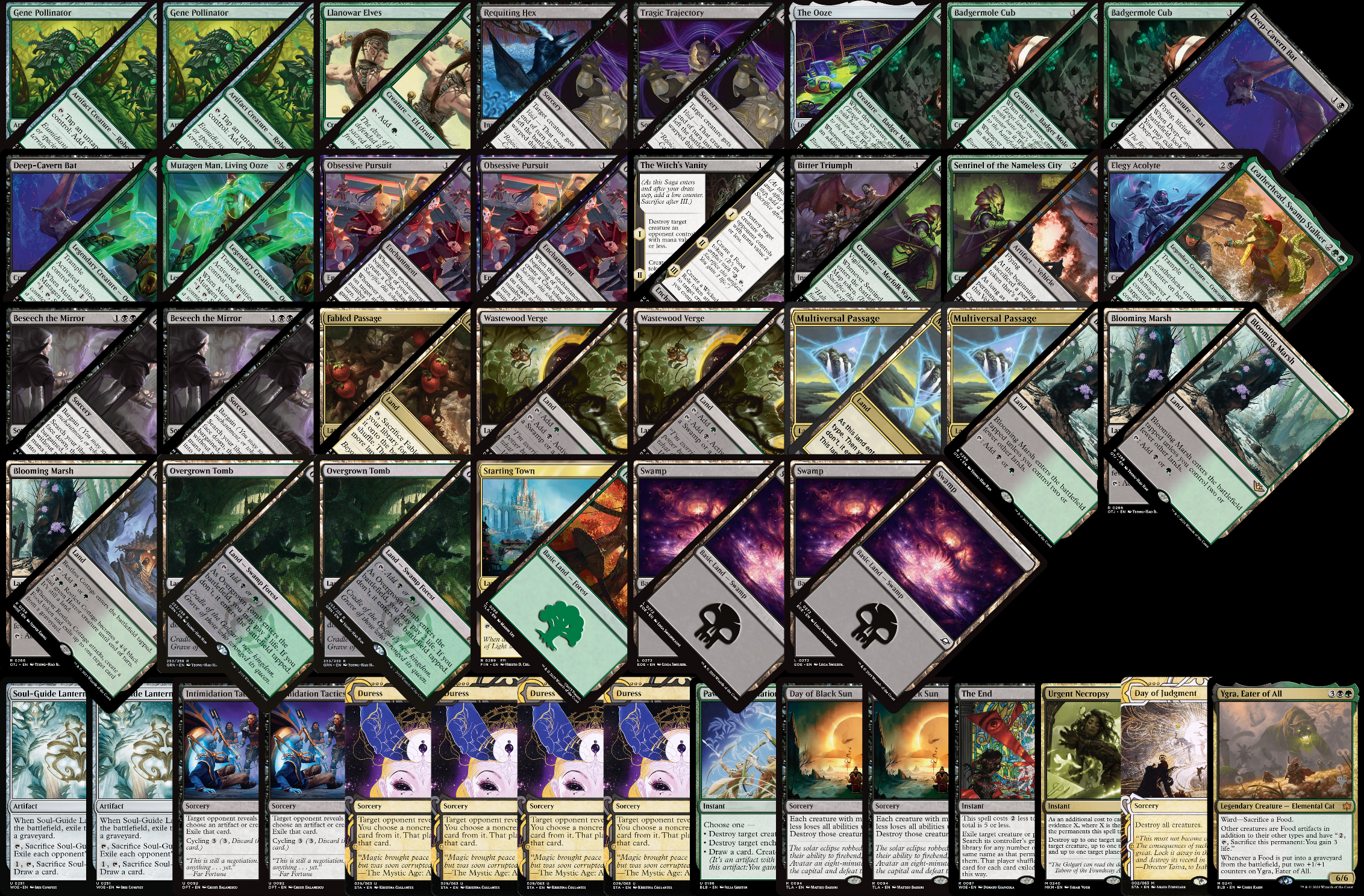 Golgari Airship Decklog 5
Introduction
Welcome to Decklog #5, which I think marks a major turning point for the deck. The release of Teenage Mutant Ninja Turtles has pushed Golgari Airship to new heights, both because of shifts in the metagame and the addition of several key cards. Golgari Airship now has what it takes to contend with any of the top decks in the format, while still flying under the radar for most players.
I've been playing a lot of Standard lately, including several RCQs, and I've been really enjoying the format. The top decks don't feel suffocating, and I genuinely feel that Standard is at its best right now.
There’s still a lot left to test and optimize. Even now, I’m experimenting with ideas in which I am not yet fully confident. I considered writing an interim decklog, but kept delaying it while trying to settle on the exact 75, which is still evolving. I’ve also put together a sideboard matrix which covers all the major matchups in the current meta.
State of the Deck
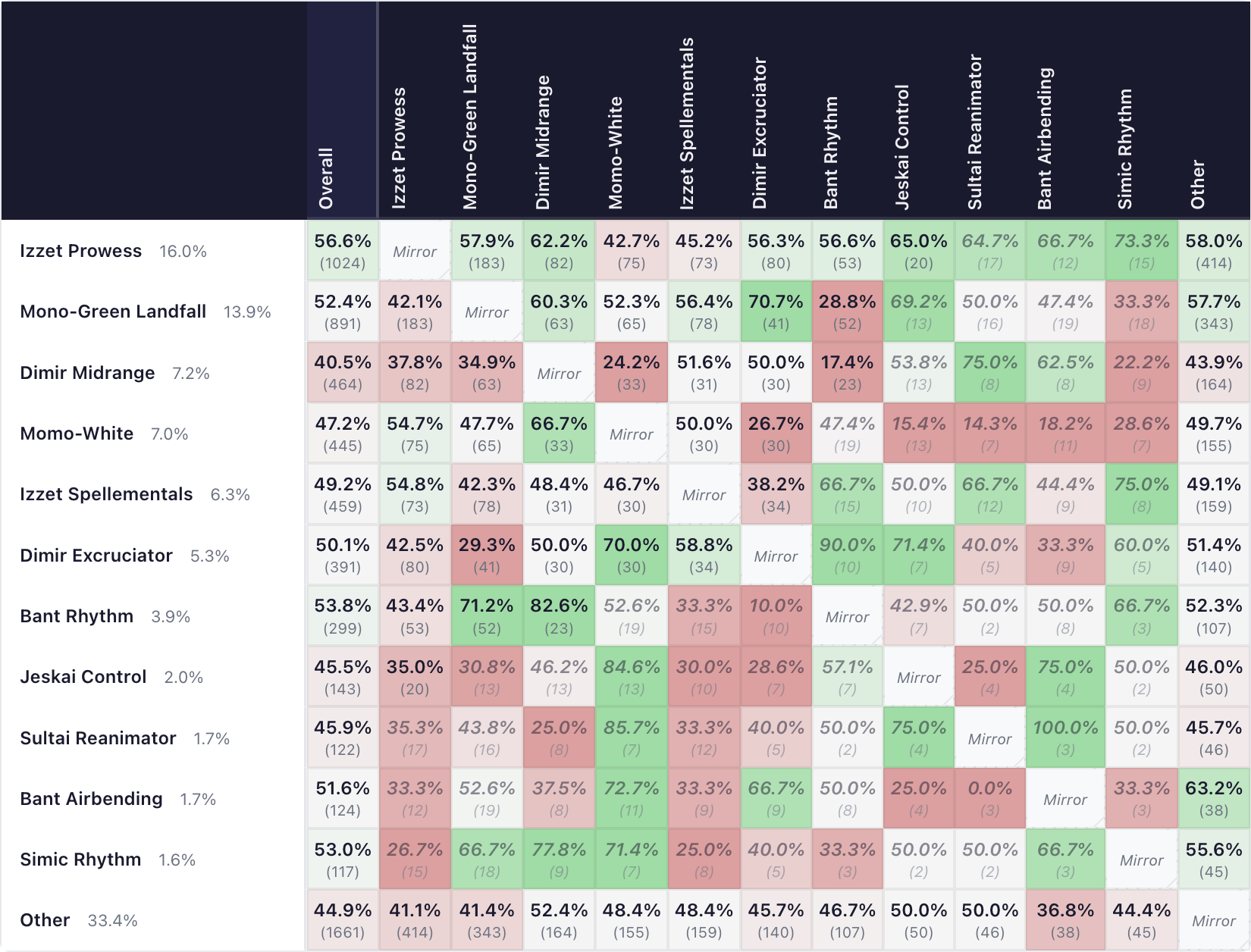 Matchup Matrix - j6e.me
The meta is pretty favourable, with many good matchups. Landfall being one of the top decks has been especially good, since Golgari Airship matches up really well against it.
The deck’s main weakness is Wistfulness, which provides a flexible and often recurring way to answer Obsessive Pursuit. Elementals and Sultai Reanimator can be difficult for this reason.
Thankfully, both of those decks are pretty rare in the metagame, with Reanimator being almost nonexistent.
On Arena, the latest version of the deck has been performing well. I’ve also played it in several paper events, where it has been consistently strong.
Matchup Changes
Izzet Lessons
Izzet Lessons was already a good matchup, and with the inclusion of Leatherhead, Swamp Stalker, the deck now has access to a card that can completely shut them down.
Mono-Green Landfall
Landfall being one of the top decks is good for Standard, since its game plan is fairly straightforward. It has many strong proactive lines, but it can be clunky at times, which leaves it vulnerable to disruption.
Deep-Cavern Bat is especially strong in the current metagame because of that, and Landfall also has relatively little interaction to remove it.
Phoenix Fleet Airship can go toe to toe with Landfall’s inevitability engine, Sapling Nursery, and can often overpower it thanks to the statline advantage of 3/4s against 4/4s. Its doubling ability also lets it outpace the number of lands the opponent can play in a turn cycle.
The most challenging cards in the matchup are Mossborn Hydra and Mightform Harmonizer, both of which function as removal checks. The deck has plenty of removal, so you will often have an answer. It is important to recognize potential kill setups and evaluate whether or not the opponent can present lethal.
Izzet Prowess
When I first played the matchup against Izzet Prowess, it felt quite unfavorable. The deck has a lot of evasion, and bounce spells line up well against stacking counters on Obsessive Pursuit.
However, after more focused testing, that has not proven to be the case. After trying several sideboarding plans, I found that cutting all the Beseeches and Airships makes the matchup much better.
Duress is the key card in the matchup, helping disrupt the opponent significantly. Boomerang Basics with Stormchaser's Talent is a powerful combination, but it becomes much weaker if you are able to remove one of the pieces. Removing protection spells for their otherwise fragile creatures, or taking a Stock Up, can also be extremely beneficial.
The Ooze has also been surprisingly effective in the matchup. Prowess can slow your clock by bouncing threats, but The Ooze helps preserve much of that pressure. Many Prowess opponents also bring in Eddymurk Crab, making the graveyard hate relevant against both it and Stormchaser's Talent level ups.
Mutagen Man is also one of the best cards in the matchup. It can't be killed by Burst Lightning without Kicker because of its three toughness, and bouncing it is awkward since its ETB can redistribute power elsewhere.
Izzet Spellementals
This has been the hardest matchup in the metagame. The opponent has access to many counterspells, and multiple Sunderflock can be devastating. Eddymurk Crab also makes it difficult to set up a Pursuit attack.
The primary issue is that the removal suite doesn't line up well against Eddymurk Crab, which can make it very hard to prevent Sunderflock from coming down.
Post sideboard, graveyard hate helps significantly. Having information on the opponent's hand is also really helpful, to help play around specific counterspells.
The End is another key card, helping remove threats from their already threat-light deck.
Rakdos Discard
Cool but Rude has been a strong addition to the deck, giving it meaningful reach. Overall, this matchup has been favorable. Golgari Airship is able to contain the opponent’s early pressure and turn the corner in a way Rakdos Discard often cannot recover from. The biggest thing to respect is how explosive their starts can be. If left unanswered, they can kill quickly, so it is important to plan for their most aggressive openings and not underestimate the amount of damage they can produce. Urgent Necropsy is also excellent in the matchup, as their battlefield often contains several different permanent types, allowing it to generate a huge tempo swing.
Momo White
This is a newer deck in the meta that has emerged as an answer to Prowess, and it is currently the best matchup for Golgari Airship.
The deck can put a large number of creatures onto the battlefield and use flying to chip in damage each turn, but its clock is not particularly fast. This allows Phoenix Fleet Airship to completely stonewall the opponent.
Obsessive Pursuit can also take over the game, often leading to long board stalls where Golgari Airship’s card advantage and inevitability eventually overwhelm the opponent.
Changes
Mutagen Man, Living Ooze
Mutagen Man, Living Ooze has been a great addition to the deck, adding a lot of explosiveness and improving our topdecks. I initially tried four copies, but the legend rule came up often enough to be annoying, so I cut back to three.
Mana dorks
Mana dorks are really important to the deck, making the deck faster, and giving the deck bodies.
Llanowar Elves have been in and out of the deck since the beginning, and I currently think running two copies is correct. This is for a few reasons.
I don't want to run 8 dorks, as I feel that's too many and they can lose value if quickly if you have too many and no payoff.
Llanowar Elves in particular are bad in multiples as they add green mana, not contributing to casting Beseech the Mirror or double spelling in a mostly black deck. Multiversal Passage also exacerbates this issue, as it has to be played on green turn one to cast a dork. With Llanowar Elves, this means you have two sources of green on turn 2 which can bite you in some instances. Cub is also a source of green.
That being said, the tradeoff with Gene Pollinator is that it needs another permanent to tap. This makes it awkward to curve into 3s in the deck, such as Sentinel of the Nameless City, and Mutagen Man, Living Ooze but this deck is generally very good at enabling it.
Leatherhead, Swamp Stalker
Leatherhead, Swamp Stalker has been a great tutor target in the deck, helping find a hexproof threat in spots where the opponent is sitting on removal or to easily setup lifelink attacks on future turns.
Hand Disruption
I’ve moved Intimidation Tactics to the sideboard. It's a very useful effect, but it competes with the need to maintain a high density of impactful plays alongside the mana dorks.
Hand disruption is still valuable, however, which makes Deepcavern Bat a better fit for the main deck. Being a creature helps maintain the deck’s creature density. It's also a nice tutor target for when you need to get a card out of the opponent's hand.
Phoenix Fleet Airship
I’ve been cutting a Phoenix Fleet Airship in many matchups, as a single copy is often enough to tutor for. Decided to do it maindeck as well, since Leatherhead, Swamp Stalker adds another really good tutor target and I still really like Elegy Acolyte.
This is a bit of a sacrifice as it makes blind Beseech the Mirror for Airship less safe, and if it gets taken from you hand or removed, you no longer have access to it.
There's also a few niche lines like tutoring the 8th airship that are lost, but the other tutor targets add a lot and Airship is fairly clunky to cast.
Manabase
I've never liked Starting Town since it enters tapped after turn three, but it helps enable the colors the deck needs. A small upside is that it also makes it easier to cast Day of Judgment when you draw it.
I cut a Demolition Field and Restless Cottage for it. I wanted to reduce the number of taplands, and colorless sources are difficult to support given the deck’s mana constraints, which are further strained by the addition of Mutagen Man, Living Ooze.
I've also been reconsidering the land count. The deck really wants to hit its third land drop to enable double spelling with cub or avoid being forced to crack clues for lands instead of developing the board. That's why I've generally preferred higher land counts.
I'm currently between 24 and 25 lands, and testing 24 after cutting a Starting Town. This isn't something you can really feel in small samples, as the difference in percentages is minor, but it can matter over a large number of games. Overall, I think either number is fine, but I'm pretty against going any lower.
The Ooze
The Ooze has been the most surprising card in terms of viability. I felt it was more gimmicky, but the effect is surprisingly powerful and synergistic.
It shines in Izzet matchups, where graveyard interaction is especially relevant. The Mutagen tokens are very synergistic and help preserve the deck’s power through bounce spells and other interaction.
I'm currently testing it in the maindeck. My initial concern was that it does nothing if you don't have a card to exile, but this hasn't been an issue as a one-of since cards naturally end up in the graveyard. Having access to maindeck graveyard hate has also been very useful in certain matchups.
Torpor Orb
Decks that Torpor Orb was particularly strong against have declined in the meta. This is further compounded by the addition of Mutagen Man, which is also negatively affected by the Orb’s symmetrical suppression of ETB effects.
The End
The End is a card I feel like I forgot about. I was testing it around the time I was testing Ancient Vendetta. The effect is especially good right now against landfall, since you can hit a forest and exile all of them from the opponents library. This completely cripples their engine and can be very game winning. It's also really helpful against Kona, Rescue Beastie decks and Bant Airbending, especially with the removal of Torpor Orb.
Ygra, Eater of All
Spellementals matchup has been difficult, and Ygra, Eater of All is really great tech in the matchup. It being an elemental means it can't be bounced by sunderflock. It's also very hard to tap down, because of the ward cost making it super insane in the matchup.
Other Cards I Tested
Ouroboroid
Ouroboroid is a really good card that has a lot of upside. It works really well with counters and is a game ending threat on it's own. It does have a prerequisite though, in that it requires other creatures on the board to really generate value, otherwise it can be slow. Ouroboroid felt really good when the deck has a fast cub start, however it just wasn't good enough in other situations. The deck doesn't have as many creatures as a rhythm deck, often leading to spots where there's only one creature. Ouroboroid isn't very great at stabilizing or generating board presence making it lackluster.
The Rise of Sozin
I've been sticking to sideboard cards that are only less than 4 mana value, however I felt that with rhythm decks feeling more resilient to boardwipes, an effect like The Rise of Sozin can really help turn the corner. It can't be beseeched into play, but it's can be very much game winning in a way that just a boardwipe can't be sometimes. Still something I want to test.
Valgavoth's Lair
Valgavoth's Lair is really cool in that it can be bargained to beseech, making it even easier to enable beseech. It's also a hexproof land to pair with cub, giving you another removal proof creature to stack counters on.
The downside is that it enters tapped, which is a pretty big downside.
Accumulated Knowledge
Clock
I've been thinking more about the clock of the deck and how to plan ahead for killing the opponent. Early turns are usually about sequencing, but there often isn't enough information to map out a full kill. Instead, I've been focusing more on estimating how many turns it will take to win, which has been helpful for planning ahead.
For example, Airship is often a two turn clock if you have enough creatures, swinging for 8 and then 16. This comes up frequently against landfall, since they don't play much interaction. A fast Airship can end the game quickly. It's also important to factor in pursuit counters when calculating damage.
Mutagen Man, Living Ooze also enables much faster kills, which makes it important to think a few turns ahead.
Kill Setups
One of the most skill testing parts of Standard is asking, "How do I die?" Many decks have specific kill setups, and it's important to recognize them early.
I played against a landfall opponent who had Surrak, Elusive Hunter and a Fabled Passage in play. This represents a lethal setup if they cast Mightform Harmonizer and double the power multiple times. Recognizing this, I beseeched for Tragic Trajectory to remove it instead of advancing my board. This line won the game, as the opponent did have the Harmonizer.
Playing Slower
I've also been trying to play slower against reactive decks like lessons, where the opponent is often holding up interaction without strong alternative plays. The deck wants to tap out for monument or talent, but in practice they frequently pass with mana up for counters.
Their fallback options, such as Abandon Attachments and Accumulate Knowledge, are either limited or require setup. This often makes it correct to play more conservatively, especially when your hand contains key cards.
Sideboarding: Maindeck Redundancy
I struggled with creating a sideboard matrix because many of my cuts were based on intuition rather than clear reasoning.Llanowar Elves comes out against Nova Hellkite or heavy removal decks, which makes sense, but I also found myself cutting them in spots where there wasn't a strong justification.
What helped was reframing this as trimming redundancy rather than cutting specific cards. Llanowar Elves often functions as copies five and six of a mana dork, so boarding them out is usually just reducing density, not removing a critical effect. That makes these swaps much easier to justify, especially when bringing in other one mana plays.
The same applies to Sentinel of the Nameless City. In many matchups, it overlaps heavily with Mutagen Man, Living Ooze as its primary role is to be a creature that generates artifact tokens. While Sentinel is a strong card, there are matchups where the game is not about incremental combat, and it becomes replaceable.
This raises the question of whether these cards belong in the maindeck if they are frequently trimmed. I think they do. Sideboard cards, especially hand disruption, can be inconsistent. These "redundant" pieces act as glue that improves the deck's baseline consistency and strengthens its proactive plan in game one.
Sideboarding: Duress Against Aggro
I've also changed how I approach Duress in aggro matchups, particularly against mono red.
Initially, I brought it in to protect key creatures from removal, especially when trying to stabilize with lifelink. The idea was that taking a burn spell like Sear could prevent the opponent from stopping my stabilization.
After discussing this with a friend at an RCQ, I shifted my perspective. Instead of focusing on how the opponent disrupts my plan, it is often more effective to focus on their primary objective. Against mono red, that objective is to kill you, and your job is to prevent that.
As a result, Duress is often too low impact in these matchups, since it does not affect the board. It's also disastrous if it misses, which is quite possible. I now bring it in far less frequently.
That said, there are exceptions. If the opponent is playing an unusually high amount of removal, Duress can still be justified. This deck relies on sticking a creature to stabilize and eventually turn the corner, especially with Obsessive Pursuit acting as a self-imposed clock.
Next Steps
I'm planning to update the guide soon. There's still a lot of testing to do, but I'm really happy with the deck's current spot and am excited to take it to more events. In the meantime, the sideboard matrix covers all the major matchups and is kept up to date.
If you have any questions or want to discuss the deck, feel free to join the Discord.